
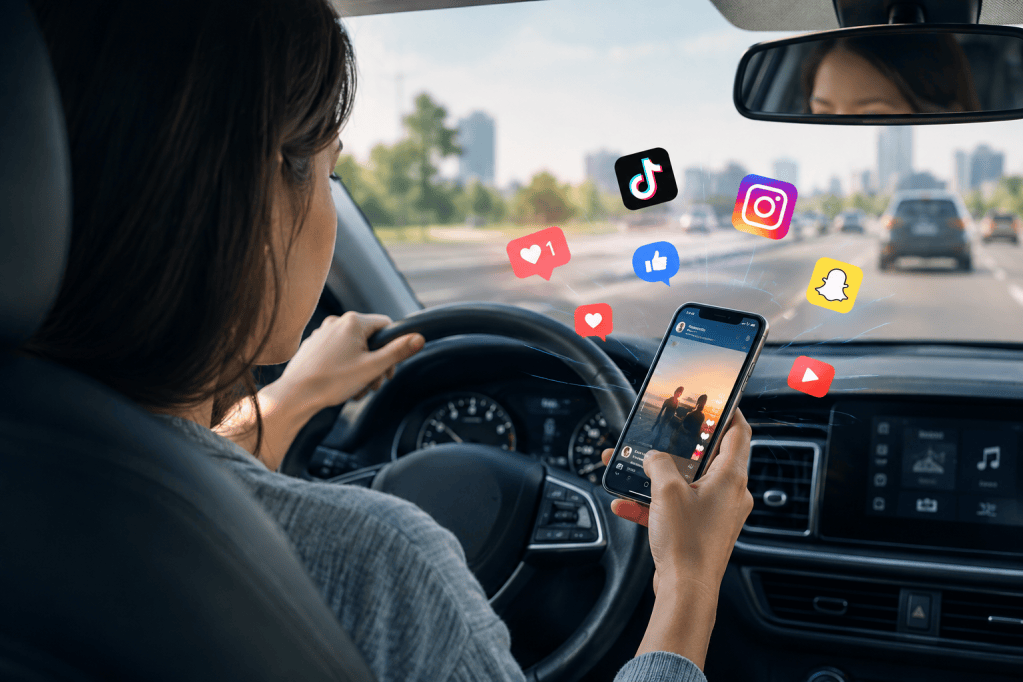
There is no need for a driver to type out the whole text in order to become distracted. Pings, notifications, videos, or just the need to read new comments will distract them from driving. Nowadays, smartphones play an important role in communication and entertainment. This way, distracted driving continues to evolve along with the changes of smartphones.
For creators and businesses that use social platforms, staying seen is a big thing. You need to handle your content all through the day. Using tools and services like buying TikTok views at https://stormlikes.com/buy-automatic-tiktok-views, can help be a part of your plan. But the main thing is clear for drivers. Managing social media should not be done while driving. Missouri’s hands-free law points out several ways of using devices that are not allowed when you are driving.
Why Social Media Creates a Different Kind of Distraction
Distracted driving is usually seen as something caused by phones. But the real problem is when your mind is not focused. According to NHTSA, there are three kinds of distractions: visual distraction, manual distraction, and cognitive distraction. A driver can look away from the road, use his hands for something else other than controlling the steering wheel, and fail to think about the current activity. Certain factors cause a driver to fall into all three of them simultaneously.
Social media can bring these distractions together fast.
Reading a comment means you need to keep your eyes on it. Typing a reply uses your hands. Thinking about what to post or watching a video uses your mind. Even if these things take just a few seconds, the driver is not putting all their focus on the road.
That is why the common thought—”I will just check this quickly” — might not be true. The risk is not just about time the phone is in someone’s hand. It is also about what happens on the road in those few seconds.
NHTSA said there were 3,208 deaths in crashes with distracted drivers in 2024. There were also more than 315,000 people hurt.
What Missouri’s Hands-Free Law Means for Drivers
Missouri’s Siddens Bening Hands Free Law, Section 304.822, has rules about using electronic devices when you drive a car. The law applies to all kinds of electronic devices. This includes anything that can show information, pictures, videos, and other data.
Driving with a handheld mobile device, typing messages to websites or applications, watching videos, and using certain functionalities of social media are prohibited by the law. However, there are a few activities drivers can still do. It is legal to use hands-free features and use your device when your car is stationary.
The consequences become more severe when a person misuses an electronic device and causes damage as a result. Under the law, breaking the rule can mean a fine for an infraction. But if a rule break is the reason for big property damage, a bad injury, or a death, it can bring much tougher criminal charges.
That difference is important. A driver might first think using the phone is not a big deal when driving. But things change a lot if someone gets hurt or something gets damaged badly. The legal trouble can get much bigger then.
The Psychology Behind the “One Quick Check”
Some people find it hard to stay away from their phones. They feel like they always need to check for new messages, updates, or posts. The phone is always with them, and they get used to picking it up many times in a day. For many, the phone feels like a way to keep in touch with people. At times, it can feel good to scroll or read on their phone, making it tough to put it down. These reasons make it difficult for them to take a break from their phone.
Part of the answer is ease. Modern apps are made so you can get new info fast. Notifications help you feel that something needs you right now, even when it can wait.
Driving creates a different priority system.
A social media notification might feel quick to answer, but it almost never needs to be. A traffic signal can switch colors. A person can walk onto a crosswalk. A car ahead can stop without warning. When you look at a screen, you do not have enough mind power left to notice or deal with those shifts.
This is very important for people who use short videos.However, browsing through your feed becomes a subconscious process. You may find yourself constantly looking for ways to monitor the progress of your post, read comments, check messages, or any other new feeds.
There is a much safer alternative—not making that decision at all. Just put the phone away before you start to drive.
Automation Can Reduce the Need for Constant Manual Checking
There is a big difference between using social media when you drive and using automation to handle social-media work before you start to drive.
Creators do not have to check every update by themselves all day. The application of such tools as content calendars, scheduled publication, and analytics dashboard will be helpful. In addition, other digital management services will minimize the necessity to pick up the phone repeatedly
The main idea about safety is simple. Automation should help you use your phone less while driving. It should not make you look at your phone more.
What Drivers Can Do Before Starting the Car
A few simple habits can really help:
Silence nonessential notifications: Stopping alerts helps you not feel that you need to respond right away.
Set up navigation before you drive: Put in your destination when you are parked. Don’t use the device while you are in traffic.
Finish social-media tasks before you leave: Look at messages, read comments, check analytics, and review publishing settings before you start your trip.
Use the right hands-free features when allowed: Hands-free devices will help reduce the need for hand usage. However, drivers must obey the law and keep both eyes on the road.
Always pull over and park in an appropriate place if something requires your immediate attention. In case if some messages, calls, videos, or account-related problem require urgent response, you should park in an appropriate place and solve it.
Such recommendations will be useful for professional drivers, influencers, small business owners, and all others who have to work with phones.
.
A Traffic Citation Is Not the Whole Story
When a driver gets a ticket for using an electronic device, it is important to look at it in a legal way. The law that applies, what happened during the stop, the proof that is there, if the driver had any past tickets, and if there was an accident can all be important.
Missouri’s law gives out different results based on what happens. For example, the law includes fines that get bigger for some convictions. It also has harsher labels if breaking the law leads to big property damage, bad injury, or a death.
Anyone dealing with a ticket or an accident case should not think that all cases end the same way. General information shows how the law works, but the right lawyer can look at the details of each case.
The Bigger Lesson for Digital Drivers
The rise of short videos has changed how people talk, promote businesses, and grow followers online. This change does not mean you have to drive in a risky way.
The key is separating the two activities.
You can plan social media posts before you travel. You can schedule what you want to share. It is easy to set up some things online to happen by themselves. You can turn off alerts. When your car is parked and safe, you can check how things went.
The driver should always pay attention. This is one thing that must not be automated.
For creators who want to find ways to increase TikTok views automatically, the best thing is to see these actions as part of a content strategy that is not always on the main path. You do not need to always be watching or controlling every detail. Digital visibility can wait a little bit. A road that changes does not.
Safe driving is really about one thing. When the car is moving, focus on the road. Give all your attention to it.





Leave a Reply