
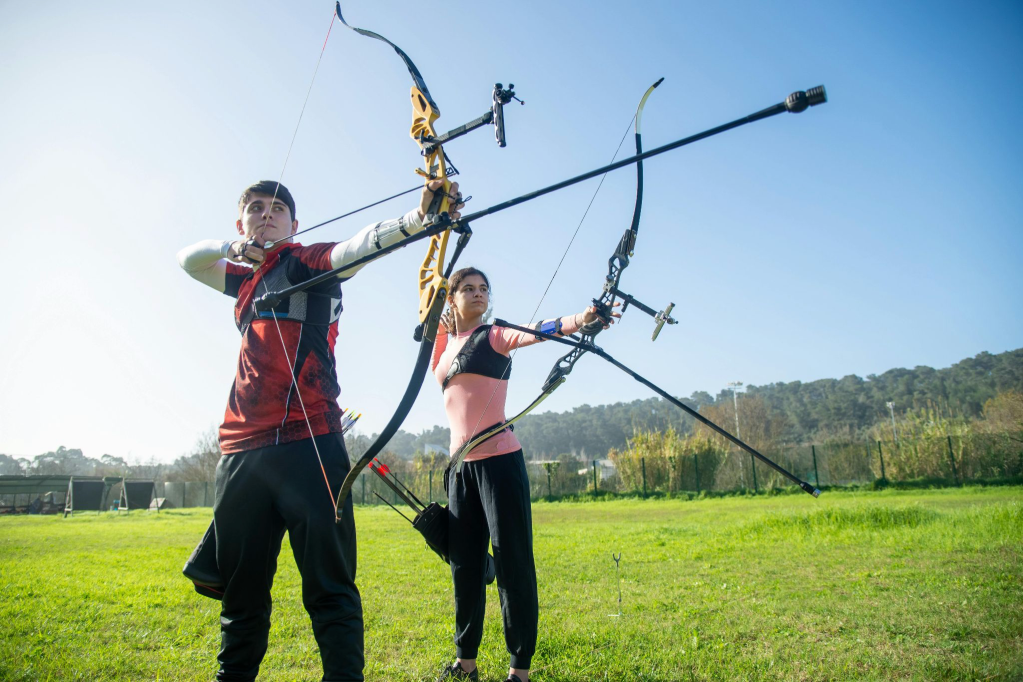
There is something oddly honest about watching students outside the classroom. A quiet student may suddenly become the one who knows how to calm everyone down. A confident student may freeze when a plan stops working. Someone who usually hides behind notes and deadlines may turn out to be very good at reading people, solving small problems, or making decisions when nobody else wants to.
This is why outdoor events for students matter more than they are often given credit for. They are not just a break from lessons or a pleasant change of scenery. They create situations where students have to act, respond, adjust, and cooperate in real time. No one can fully prepare for wind, noise, tired teammates, missing equipment, or a group that cannot agree on what to do next.
A classroom can teach theory. Outdoor learning tests whether a student can use it when things are less controlled.
Learning Becomes Real When Students Have to Move
Many students spend most of their academic life sitting down. They listen, read, write, submit, repeat. That routine has value, of course, but it can also make learning feel distant from real life.
Outdoor events change the rhythm. Students have to move, speak, carry, organize, observe, and sometimes improvise. During experiential learning activities, knowledge is not just something they remember. It becomes something they use.
For example, planning a campus charity event may teach budgeting, communication, and leadership better than a worksheet on project management. A field trip may teach observation better than a slideshow. A student environmental project may teach responsibility more deeply than a lecture about climate awareness.
Academic work still matters, and many students need help managing it alongside practical learning. write any paper supports students who need writing assistance when academic pressure becomes difficult to handle. Outdoor events, however, build a different type of ability: the ability to function when the task is physical, social, unpredictable, and shared with others.
The Skills Are Often Hidden at First
The benefits of outdoor learning are not always obvious while the event is happening. A teacher may see students laughing, walking, arguing, or getting distracted. It may not look serious. But underneath that ordinary mess, students are practicing important skills.
They learn how to explain an idea without sounding bossy. They learn how to wait. They learn when to speak and when to stop talking. They learn that a group can fall apart because of one careless comment. They learn that leadership is not always the loudest voice.
Here are some common outdoor activities and the skills they can build:
| Outdoor activity | Skills students practice |
| Campus clean-ups | Responsibility, teamwork, civic awareness |
| Hiking or orientation games | Resilience, decision-making, planning |
| Outdoor debates | Public speaking, confidence, listening |
| Sports days | Discipline, cooperation, emotional control |
| Environmental projects | Problem-solving, patience, observation |
| Volunteer events | Empathy, organization, communication |
These skills are hard to measure with a simple test. Still, they often stay with students longer than facts they memorized only to pass an exam.
Teamwork Stops Being Just a Nice Word
Teamwork is one of those words that appears everywhere in education. It sounds good, but students do not always understand what it means until they have to depend on each other.
Team-building activities for students make cooperation visible. If a group has to complete an outdoor challenge, organize a booth, prepare a performance, or guide younger students during an event, every person’s behavior matters.
One student may be good at planning but poor at listening. Another may avoid speaking but notice details others miss. A third may take charge too quickly and create tension. These patterns appear fast when students are outside the usual classroom structure.
That is useful. Not always comfortable, but useful.
Outdoor events show students that teamwork is not just “working together.” It is handling disagreement, sharing responsibility, noticing effort, and recovering when someone makes a mistake.
Confidence Grows Quietly
Confidence is difficult to teach directly. Adults often tell students to believe in themselves, but that advice can sound empty when a student has no proof.
Outdoor events give students proof.
A student who finishes a long walk, leads a group activity, helps solve a practical problem, or speaks to visitors at a school event gains a small but real sense of competence. It may not look dramatic. There may be no big speech or emotional breakthrough. Still, something changes.
The student thinks, “I handled that.”
That matters.
For students who do not always perform well in traditional academic settings, outdoor learning can be especially powerful. A student who struggles with essays or tests may shine during a field project, sports event, or volunteer activity. This does not mean academic skills are unimportant. It means students are more complex than their grades.
Real Examples Make the Point Stronger
Many respected institutions use outdoor or field-based learning because it gives students contact with real environments. Stanford University, Cornell University, and the University of Edinburgh all include forms of fieldwork, outdoor research, or experiential education in different programs.
This approach is not new. Educational thinkers such as John Dewey argued that learning should connect with experience, not remain trapped in abstract instruction. His ideas still feel relevant because students often understand something better after they have lived through a version of it.
The Duke of Edinburgh’s Award is another example. It asks young people to take part in volunteering, physical activity, skills development, and expeditions. The point is not only to finish tasks. It is to develop independence, resilience, and responsibility through experience.
Outdoor events do something similar on a smaller scale. They create conditions where students discover what they can do.
Teachers Also Learn About Their Students
Outdoor events do not only benefit students. They help educators see students differently.
In a classroom, a teacher may mostly notice who submits assignments, who answers questions, and who stays quiet. Outside, other qualities appear. Some students become natural organizers. Some are calm during stress. Some are unexpectedly kind. Some struggle with freedom and need clearer boundaries.
This gives teachers valuable information. It helps them understand students as people, not only as academic performers.
A school administrator may also see outdoor events as a way to improve school culture. When students work together outside formal lessons, they often build connections across groups. A student who would never speak to someone in class may cooperate with that person during an outdoor task.
That kind of social mixing is hard to force, but outdoor events make it more natural.
Outdoor Learning Needs Structure
Outdoor events should not be random. Students can have fun outside and still learn very little if the activity has no purpose.
Good outdoor learning needs structure. Not too much, but enough.
Educators should ask:
- What skill should students practice?
- What role will each student have?
- How will students reflect afterward?
- What problem or challenge will make the activity meaningful?
- How will quieter students be included?
Reflection is especially important. Without it, students may enjoy the event but miss the lesson. A short discussion, journal entry, group review, or even a few honest questions can help students understand what they learned.
Questions can be simple:
- What was harder than expected?
- Who helped the group most, and how?
- What would the group do differently next time?
- What did each student learn about themselves?
The answers are often more revealing than a formal report.
Why This Matters Beyond School
The world students enter after graduation is rarely neat. Workplaces involve people, pressure, delays, unclear instructions, and changing plans. Life does too.
Outdoor events prepare students for that reality in a practical way. They teach students that skills are not only built through reading or listening. Skills are built through action, reflection, failure, adjustment, and trying again.
Student skill development should include communication, resilience, leadership, responsibility, and emotional control. These are not extra skills. They are survival skills for adult life.
A student may forget the exact details of a classroom lecture. But they may remember the day they had to lead a group through a difficult task, speak in front of strangers, or keep going when the plan collapsed.
A More Honest Way to Learn
Outdoor events help students learn new skills because they make learning harder to fake. A student cannot pretend to cooperate when the group needs real help. They cannot pretend to lead if nobody trusts them. They cannot pretend to solve a problem if the problem is right there in front of everyone.
That is why outdoor learning feels different. It is less polished, less predictable, and sometimes less comfortable. But it is also more alive.
Students need classrooms. They need books, teachers, assignments, and quiet study. But they also need open spaces where they can test themselves in real situations.
Not every lesson belongs behind a desk. Some lessons need noise, movement, weather, mistakes, and other people. That is where students often find out what they are capable of.


Leave a comment