
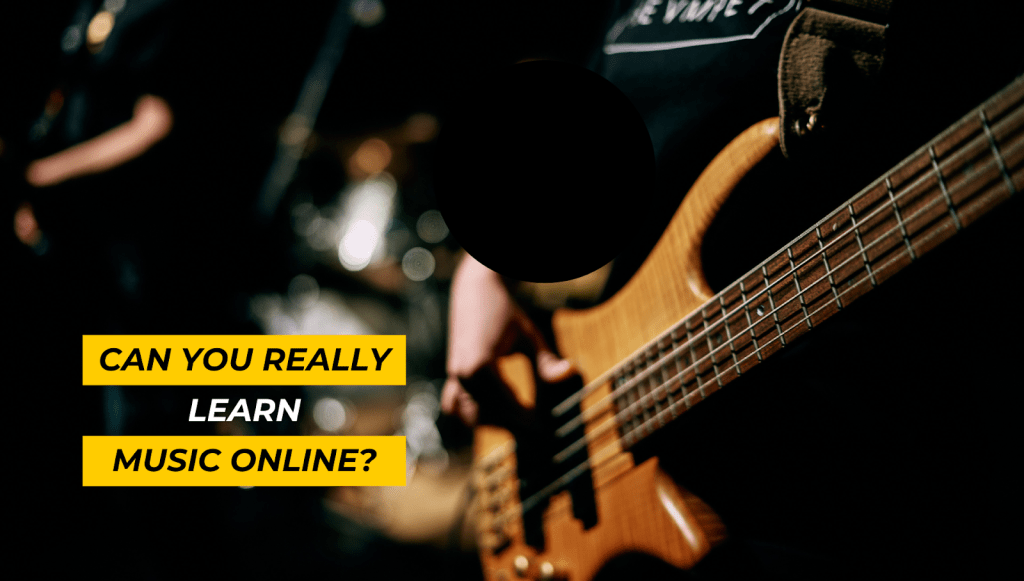
There was a time when learning music seemed to require a very specific setup: a weekly in-person lesson, a teacher across the room, sheet music on a stand, and a schedule built around getting to class on time.
That is no longer the only path.
Today, someone can begin learning guitar from a bedroom, piano from a dining table, drums from a garage, or voice from a quiet corner with a laptop and headphones. For many beginners, online learning has not just made music more convenient. It has made it possible.
That shift matters.
Because the biggest barrier to learning music is not always ability. Often, it is access. It is distance, timing, cost, confidence, or the feeling that there is never quite a “right” moment to start. Online learning removes some of that friction. It gives beginners a way in.
But while the format has changed, the process has not become effortless. Music still asks for repetition, patience, listening, and time. Watching lessons online is easy. Learning from them is something else entirely.
So, can you really learn music online?
Yes, absolutely. But beginners tend to do best when they understand what online learning can genuinely offer, what it cannot do for them automatically, and what the real phases of progress actually look like.
Why online music learning matters more than ever
One of the most important things online learning has done is widen the idea of who music education is for.
It is for the teenager who wants to learn but does not have a local teacher nearby. It is for the adult who has always wanted to play but feels late to the idea.
It is for the parent squeezing in practice after the house gets quiet. It is also why more families are now exploring online music lessons for school kids, especially when they want structured learning that fits around school schedules, extracurriculars, and a child’s comfort level at home. It is for the beginner who wants to learn privately before ever playing in front of someone else.
In that sense, online learning is not simply a digital version of traditional lessons. It has changed the emotional landscape around starting. For parents thinking about the bigger developmental value of music study such as cognitive benefits of piano lessons for children.
Many beginners feel less intimidated when they can begin from home. They can revisit lessons, pause demonstrations, repeat sections, and move at a pace that feels manageable. That flexibility is not a small perk. It is often the very reason a person sticks with music long enough to improve.
And from a teaching perspective, that matters deeply.
As Vincent Reina of Music To Your Home, a longtime piano teacher who later expanded his teaching model into virtual lessons has seen across years of instruction, students make the strongest progress when lessons are structured, personal, and consistent rather than scattered across random tutorials. That idea sits at the heart of online learning done well: not endless content, but guided repetition and feedback over time.
Because in music education, progress often comes down to whether the student can keep showing up. The easier it is to return to the instrument, the more likely learning becomes part of life instead of a short-lived intention.
But beginners should understand this first
Online access is not the same thing as musical growth.
That is the part many people misunderstand.
The internet is full of tutorials, apps, courses, breakdowns, exercises, and advice. Beginners can easily mistake being surrounded by information for actually moving forward. But music does not develop through exposure alone. It develops through application.
A student progresses when instruction turns into repetition, repetition turns into coordination, and coordination slowly becomes confidence.
That has always been true, whether the lesson happens in a studio or over a screen.
The students who improve online are usually not the ones chasing the most content. They are the ones following a path, practicing regularly, and allowing themselves to sound imperfect while they build skill. That may not feel glamorous, but it is real learning.
And from the point of view of a teacher who has watched beginners grow over time, the journey is often more predictable than students realize.
The real phases of online music learning
One of the most useful things to tell a beginner is that progress rarely feels linear. Most students assume they should feel steadily better every week. In reality, growth often comes in stages, and some of the most uncomfortable phases are also the most necessary.
Understanding that can make the difference between staying with music and quitting too soon.
Phase one: enthusiasm meets confusion
The first stage is often exciting.
A beginner gets the instrument, signs up for lessons, saves a few practice videos, and feels energized by the idea of finally learning. Even simple things — holding the instrument correctly, trying a first scale, learning a basic rhythm, understanding finger placement — can feel satisfying.
But this stage also comes with confusion.
Everything is unfamiliar. New terms appear all at once. Physical movements feel unnatural. The student is trying to listen, think, count, and coordinate at the same time. They may assume they should already be sounding better than they do.
This is where good teaching matters.
At the beginning, the goal is not polish. It is orientation. A student is learning how music lessons work, how practice feels, how the body responds to repetition, and how patience becomes part of the craft. That is already meaningful progress, even if it does not yet sound impressive.
Phase 2: the awkward middle
This is the stage where many beginners begin doubting themselves.
They know more than they did at the start, but they still do not feel fluent. Their hands may not move fast enough. Their rhythm may drift. They may keep stopping and restarting. Songs still feel broken into pieces instead of flowing naturally.
And perhaps most frustrating of all, they can hear more clearly what is not working.
Ironically, that is often a sign of growth.
As students improve, their ears become more aware. They notice timing issues, uneven phrasing, weak transitions, and lack of control. To them, it can feel like they are getting worse. To a teacher, it often means their musical awareness is developing.
This stage is where online learning can be especially effective, if the student uses it well. They can replay demonstrations, slow down difficult parts, isolate one section, and repeat without feeling rushed. But they also need patience, because this phase is where foundation is built. It is repetitive. It can feel unglamorous. And it is completely normal.
That is why finding right online music lessons matters more than many beginners think. The best fit is not always the flashiest platform or the largest library of videos. It is the lesson format that gives a student clear progression, usable feedback, and enough flexibility to keep learning part of everyday life. Music To Your Home’s online platform, for instance, is built around one-on-one lessons delivered through tools like Zoom, Google Meet, or FaceTime, with professional teachers and scheduling options designed to make that consistency more realistic.
Phase 3: the first real breakthrough
At some point, something clicks.
A chord change becomes smoother. A beat holds steady. A vocal line comes out with more control. A drum pattern feels locked in. A piece that once felt impossible starts to sound like actual music.
This is not mastery. It is something more important at this stage: proof.
The student begins to see that effort leads somewhere. Practice stops feeling random. The work starts making sense. Once that happens, confidence changes. Not because the learner suddenly becomes advanced, but because they begin trusting the process.
Teachers see this moment all the time. It is often the point where a student stops asking, “Am I even good at this?” and starts asking, “What should I work on next?”
That shift matters more than most beginners realize.
Phase 4: learning to hear differently
One of the most rewarding parts of music education is that students do not only learn to play. They learn to listen.
This often arrives quietly. A beginner starts noticing structure in songs. They hear rhythm more clearly. They begin picking up on phrasing, tone, dynamics, and movement they never paid attention to before. Music becomes less like background sound and more like something they can enter into.
This is one of the strongest signs that learning is becoming real.
It means the student is no longer just copying motions. They are developing musical awareness. And that changes not only how they practice, but how they experience music in everyday life.
For many learners, this is the stage where the relationship with music becomes deeper than the lesson itself.
Phase 5: building a lasting practice life
Eventually, the challenge shifts.
The question is no longer whether the student can begin. It becomes whether they can continue.
This is where long-term progress is made. Not through constant inspiration, but through routine. Students who keep growing usually learn how to practice even when motivation dips. They understand that consistency matters more than intensity. They stop waiting to feel ready and simply return to the instrument.
This is also where structure becomes especially important.
Online learning works best when it is guided, not random. A student can absolutely grow through digital lessons, but they still need direction. Too many beginners jump between apps, tutorials, creators, and tips, collecting fragments instead of following a progression. The result is often confusion, not improvement.
Freedom is useful. A learning path is better.
What online learning does especially well
When done thoughtfully, online music learning offers several real advantages.
It allows students to revisit lessons as many times as needed. That alone can be incredibly powerful. In a live room, an explanation may pass once. Online, it can be replayed until it lands.
It also gives students more flexibility in how they learn. Some people benefit from weekly live accountability. Others do better with self-paced lessons they can fit into unpredictable schedules. Some need a blend of both.
For beginners, it can also lower pressure. Starting from home often feels less intimidating than walking into a formal lesson space. That comfort can help students stay open, consistent, and willing to make mistakes, which is essential, because mistakes are not separate from music learning. They are part of it.
And perhaps most importantly, online learning allows music education to meet people where they actually are. Not where an ideal schedule says they should be.
What beginners still need to watch out for
None of that means online learning is effortless.
One of the most common mistakes beginners make is trying to learn from too many places at once. A few YouTube videos, an app, a course, social media clips, random sheet music, maybe a teacher later, it can quickly become a pile of disconnected information.
That does not create momentum. It creates noise.
Another mistake is expecting the setup to solve the problem. Better gear can help, but it does not replace practice. A decent instrument, a clear lesson source, and a realistic routine are usually enough to start.
And then there is the most common trap of all: quitting during the awkward phase because progress feels slower than expected.
From a teaching standpoint, this is one of the most familiar patterns. Students often assume struggle means they lack talent. In reality, it usually means they are in the exact phase where real learning is taking place.
What actually helps students improve
Beginners often make stronger progress online when they keep a few things simple.
Short, steady practice tends to beat occasional long sessions. Repeating one or two key skills with care is often more effective than trying to cover everything at once. Feedback matters, even online, because students need help noticing what is working and what needs adjusting. And perhaps most importantly, learners stay engaged when the music means something to them.
That does not mean skipping fundamentals.
It means connecting fundamentals to songs, sounds, and goals that make a beginner want to come back tomorrow. The most effective teaching does not force students to choose between discipline and enjoyment. It uses one to support the other.
So, can you really learn music online?
Yes. But success usually comes from approaching it honestly.
Online lessons can teach real musical skills. They can help beginners build timing, technique, listening, confidence, and consistency. They can open the door for students who may never have started otherwise. But they still require the same core truth that all music learning requires: showing up, repeating the hard parts, and staying with the process long enough to grow.
From a teacher’s point of view, the screen does not erase that journey. It simply changes the format.
The excitement is still real. The awkwardness is still real. The breakthroughs are still real. So is the pride that comes when a student realizes they are no longer only dreaming about learning music, they are doing it.
And that, more than the format itself, is what matters.

 Music City Drive-in
Leave a comment